
I stared at the image on my phone until my screen dimmed, hoping that if I looked hard enough, the pixels would rearrange themselves into something respectable. They didn’t. The image—a grainy, unauthorized set photo from the upcoming MCU X-Men reboot—shows Taron Egerton standing in a parking lot in what is supposed to be the legendary Wolverine suit. Instead, it looks like he lost a bet at a comic convention. The yellow isn’t the muted, tactical mustard of Deadpool 3; it is a neon, highlighter yellow that screams “polyester blend.” The mask sits on his head not like a tactical helmet, but like a floppy rubber cowl purchased from a seasonal pop-up store.
We have waited over two decades for this. Ever since Kevin Feige announced the mutants were coming home, the internet has been drafting dream scenarios. We wanted the grit of Logan mixed with the color palette of The Animated Series. What we seemingly got is a CW TV budget wardrobe on a $250 million Disney blockbuster. The immediate visceral reaction isn’t just disappointment; it’s confusion. How does a studio that engineered the Iron Man mark III armor—a pinnacle of practical and CGI blending—produce a costume that looks like it wrinkles if the actor moves too fast?
The “Spirit Halloween” Effect
The problem isn’t just the color; it’s the texture. In modern superhero cinema, texture is the difference between a character looking like a god or a cosplayer. Look at Henry Cavill’s Superman suit in Man of Steel. It was a chainmail-like mesh that absorbed light and gave him mass. Look at Robert Pattinson’s Batman suit, which was scuffed, heavy, and utilitarian.
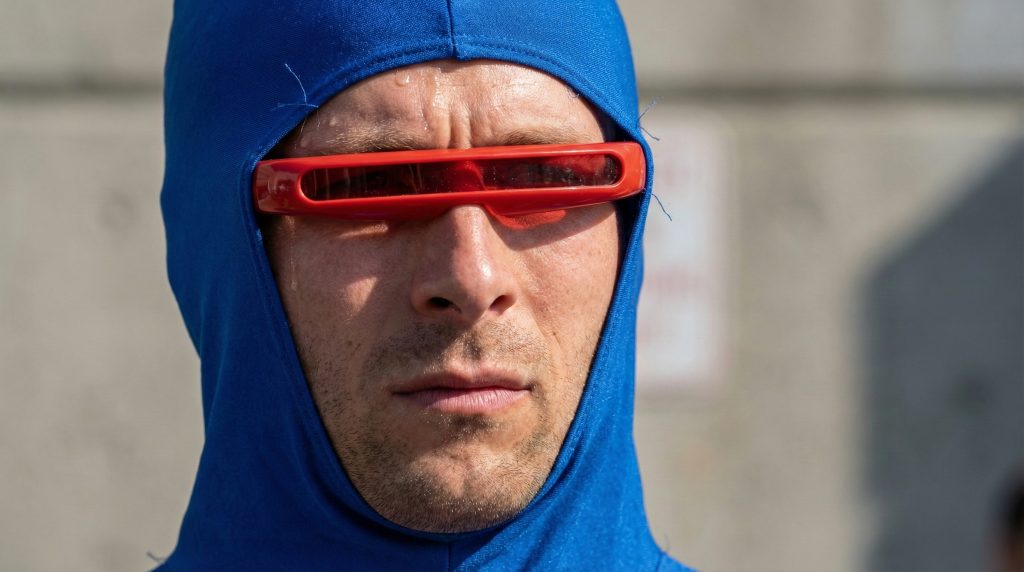
The leaked photo of Glen Powell’s Cyclops shows a suit that is aggressively smooth. There is no weaving, no armor plating, no sense that this garment is designed to withstand concussive blasts or sentinel lasers. It looks like spandex. Pure, unadulterated, 1980s aerobics spandex. While there is a segment of the fanbase screaming “It’s comic accurate!”, there is a fine line between honoring the source material and failing to adapt it to a live-action medium. Comic books use flat colors because of printing limitations. Reality has lighting conditions. When you put a flat, primary-blue suit under 4K digital cameras, it doesn’t look heroic. It looks like a onesie.
The Fanbase is fracturing
Social media has, predictably, turned into a war zone. The defenders are clinging to the “Post-Production” life raft. “They’ll fix it in post!” is the rallying cry. “There will be CGI overlays!” But we have been down this road before. Remember the Green Lantern suit? Remember the initial Sonic design? Relying on VFX to fix fundamental design flaws is a death sentence for a film’s aesthetic.
If the practical suit looks cheap on set, the lighting artists have to work double-time to make it look real. They have to artificially add shadows, scuffs, and weight. It creates that uncanny “floating head” effect that has plagued recent Marvel phases. When the physical object interacts poorly with the physical light, the eye knows it’s fake. Taron Egerton is a fantastic actor with the physicality for the role, but seeing him in a suit that bunches up around the knees takes away every ounce of intimidation factor. Wolverine is an animal; he shouldn’t look like he’s wearing a mascot costume.
Why Technical Design Matters
From a cinematography standpoint, this is a nightmare. Lighting bright yellow and blue requires specific grading to avoid looking like a Saturday morning cartoon. If the rumors are true and they are shooting on the Arri Alexa Mini LF for a gritty, cinematic look, these costumes are going to clash horribly with the intended tone. You cannot have a dark, emotional story about prejudice and mutation while the lead actor looks like a banana.
The visor on Cyclops is the most egregious offender. In the leak, it appears to be a practical red plastic strip. It doesn’t glow. It doesn’t hum with contained energy. It’s just… red plastic. In 2026, with the technology available to prop makers—LED embedding, diffusion materials, reactive lighting—using a static piece of plastic is unforgivable. It suggests a rushed production, a “fix it later” mentality that has led to the visual decline of the franchise.
Final Verdict
Marvel needs to understand that “comic accuracy” does not mean “cheap.” We wanted the designs, not the materials. We wanted the silhouette, not the lack of detail. If these leaks are the final product, the X-Men reboot is starting with a massive visual handicap. It is hard to fear a Wolverine who looks like he’s about to ask for candy. We can only hope that this is a decoy, a prank, or a very, very early prototype. Because if this is what the mutants are wearing to war, they’ve already lost.

Jordan Blake is a rogue film critic and former VFX compositor with over 15 years of industry experience. Tired of paid reviews and “safe” opinions, Jordan left the studio system to tell the audience what Hollywood won’t. He specializes in forensic frame-by-frame analysis, exposing bad CGI, and decoding hidden lore that others miss.
Known for his “no-nonsense” approach, Jordan pays for his own tickets and refuses to attend press junkets, ensuring his loyalty belongs only to the fans. If a movie is a cash grab, he’ll say it. If it’s a masterpiece, he’ll explain why technically.
Specialty: VFX Breakdowns, Script Analysis, Hidden Details.
Motto: “Cinema doesn’t lie, but marketing does.”
Follow him for: The truth behind the pixels.