
Sidney Prescott saves the movie, but the absence of Patrick Dempsey (and the “Core Four”) leaves a massive scar.
I’m writing this at 3 AM after the opening night showing of Scream 7, and my voice is gone. Not from screaming in terror, but from the sheer exhaustion of debating what I just watched in the parking lot.
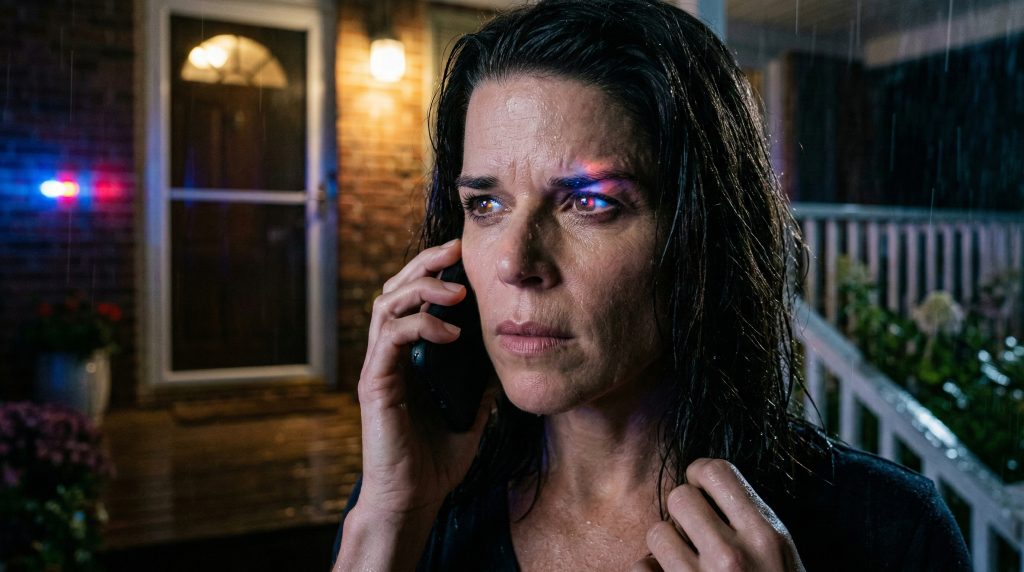
Neve Campbell is back, and seeing Sidney Prescott on the big screen again feels like coming home. But let’s be real: this movie is a mess. A nostalgic, bloody, chaotic mess that I can’t stop thinking about.
Director Kevin Williamson—the man who started it all—finally took the chair, and the result is a film that feels less like a sequel and more like a “Greatest Hits” album played at max volume. The critics are already tearing it apart, calling it “nostalgia bait.” But as a lifelong fan, I have a different take: This isn’t a movie for the critics. It’s a messy love letter to us, written in blood.
The “Sidney Prescott” Factor
I honestly feel that the franchise lost its soul when Sidney sat out Scream VI. Watching her step back into the frame changes the entire gravitational pull of the movie.
There is a scene early on—just Sidney in her kitchen, locking a door—where Campbell conveys more trauma and resilience with a single look than the entire cast of Scream 5 combined. The narrative pivot to focus on Sidney’s daughter, Tatum (played by Isabel May), is the emotional hook the film desperately needs. Yes, naming her “Tatum” is heavy-handed fan service, but when I saw the first interaction between them, I bought it. It’s not just about “rules” anymore; it’s about a mother protecting her cub.
The “Mark” Problem: Why Did You Do This?
Here is where I have to rant. The decision to recast Sidney’s husband is baffling. We all wanted Patrick Dempsey back as Detective Kincaid.
Instead, we got Joel McHale. Don’t get me wrong, I like McHale, but seeing him step into the role felt… wrong. The film tries to gloss over it, but every time he was on screen, the audience shifted uncomfortably. It’s a glaring reminder of the behind-the-scenes chaos—the firing of Melissa Barrera, the exit of Jenna Ortega. You can feel the rewrites in the script. The domestic dialogue feels clunky, lacking that sharp Williamson wit we’re used to.
Technical Analysis: The Look of Legacy
Visually, this is the darkest Scream yet. I noticed the cinematography (shot on Arri Alexa Mini LF) leans heavily into shadows. The opening sequence at the Stu Macher house—yes, we go back there—is lit primarily by flashlights and lightning. It creates a suffocating atmosphere, even if I missed the crisp look of the originals.
However, the kills are practical and gnarly. The close-ups of the Ghostface mask show battle damage—scratches, yellowing age—that tells a story on its own. And the library sequence? A masterclass in tension that had my row gasping for air.
Final Verdict
Scream 7 is flawed, frantic, and frustrated by its own legacy. But it has Neve Campbell. And sometimes, the Queen is all you need to make the ticket price worth it.
Score: 7/10 (For Neve only).
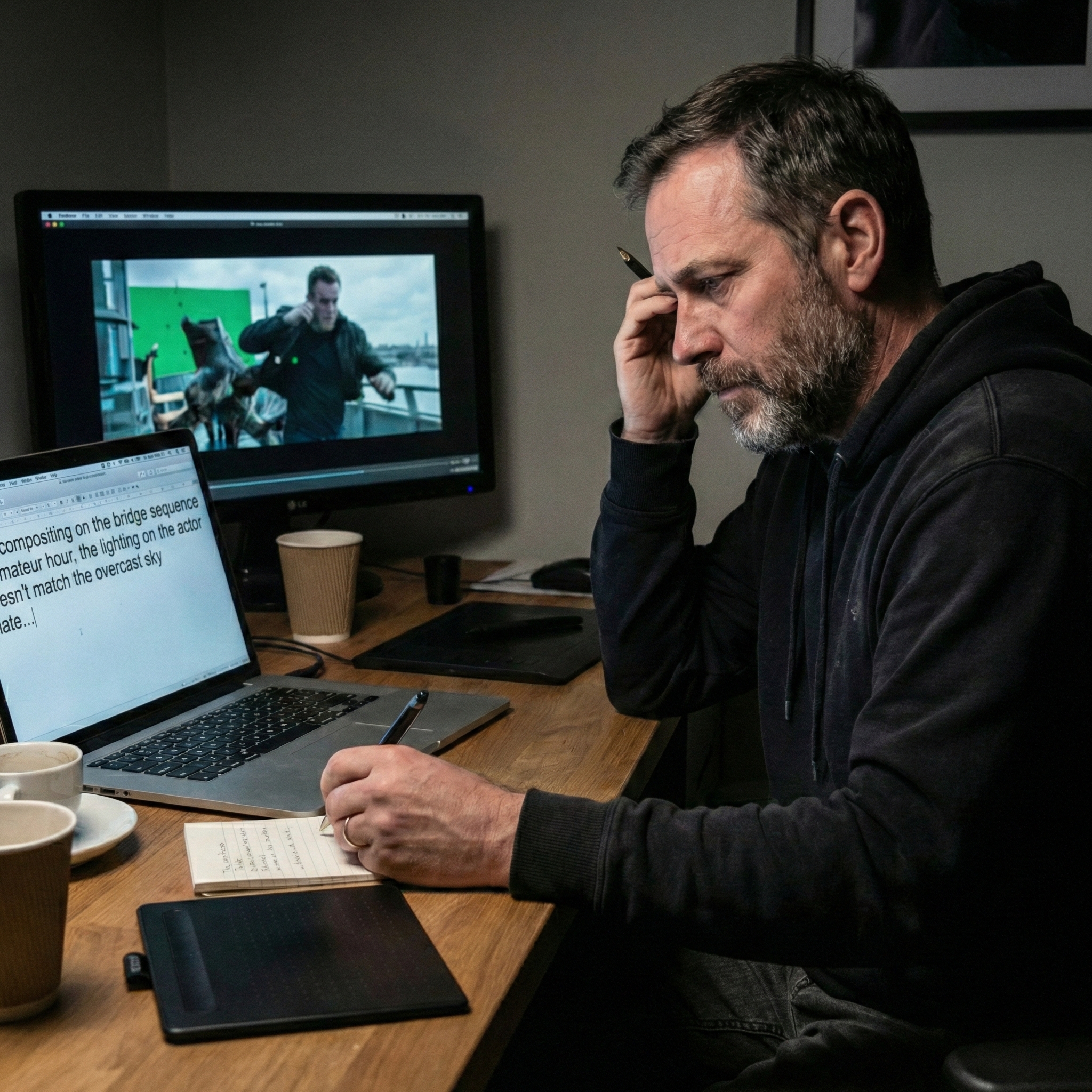
Jordan Blake is a rogue film critic and former VFX compositor with over 15 years of industry experience. Tired of paid reviews and “safe” opinions, Jordan left the studio system to tell the audience what Hollywood won’t. He specializes in forensic frame-by-frame analysis, exposing bad CGI, and decoding hidden lore that others miss.
Known for his “no-nonsense” approach, Jordan pays for his own tickets and refuses to attend press junkets, ensuring his loyalty belongs only to the fans. If a movie is a cash grab, he’ll say it. If it’s a masterpiece, he’ll explain why technically.
Specialty: VFX Breakdowns, Script Analysis, Hidden Details.
Motto: “Cinema doesn’t lie, but marketing does.”
Follow him for: The truth behind the pixels.